
Treating Pancreatic Cancer in Bolivia: Expanding Access to the Whipple Procedure
Solidarity Bridge recently concluded its sixth Oncological Surgery Mission Trip to the Cancer Institute of Eastern Bolivia, Bolivia’s main public cancer hospital. Four of the ten patients treated have advanced pancreatic cancers. Pancreatic cancer is one of the most feared diagnoses, with a global five-year survival rate of just 10%. Although it is the 12th most common cancer, it is the 6th leading cause of cancer-related death.
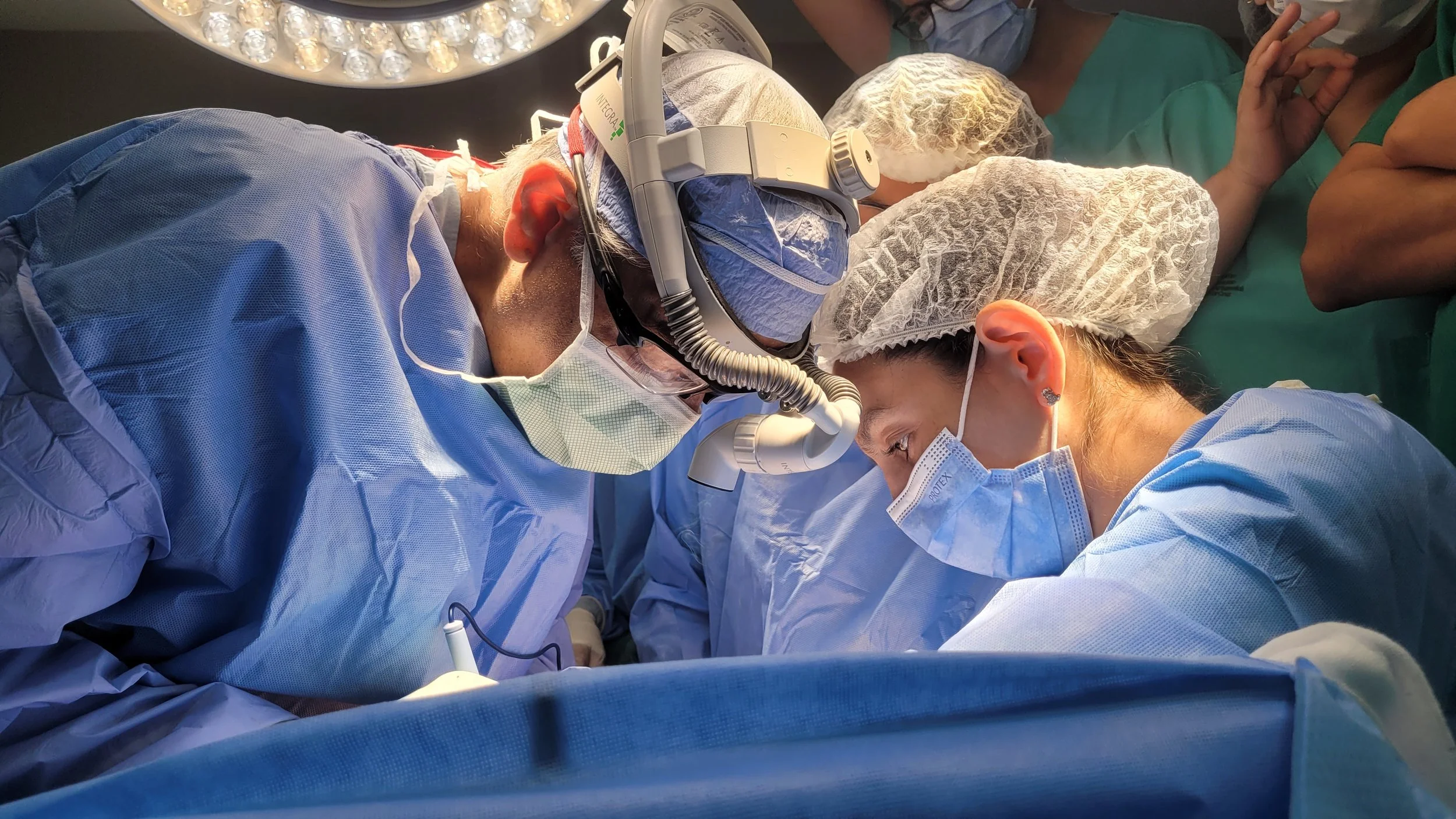
Dr. Malcolm Bilmoria performing a Whipple surgery alongside local surgeon, Dr. Cecilia Padilla.
The Whipple, named after Dr. Allen Whipple who pioneered the procedure in the 1940s, is the most common surgery to remove pancreatic tumors. It involves removing and reconstructing a large part of the gastrointestinal tract. Parts (or in some cases all) of the pancreas, small intestine, bile duct, gall bladder, stomach, and nearby lymph nodes may be removed before the digestive system is rerouted to restore the patient’s ability to eat. After surgery, patients must be closely monitored for complications for a week or two while they slowly begin eating and drinking again. When it is an option, Whipple surgery offers patients their best chance for long-term management of all types of pancreatic cancers.
The Whipple is described as one of the most complex abdominal surgeries. Every case is different, requiring the surgeon to make critical decisions along the way. Even the latest imaging technology available in the United States may not provide perfect information with which to foresee every possibility. For these reasons, surgeons who want to master the Whipple need to participate in as many surgeries as they can alongside more-experienced peers who can mentor them on how to assess and proceed in every unique scenario.
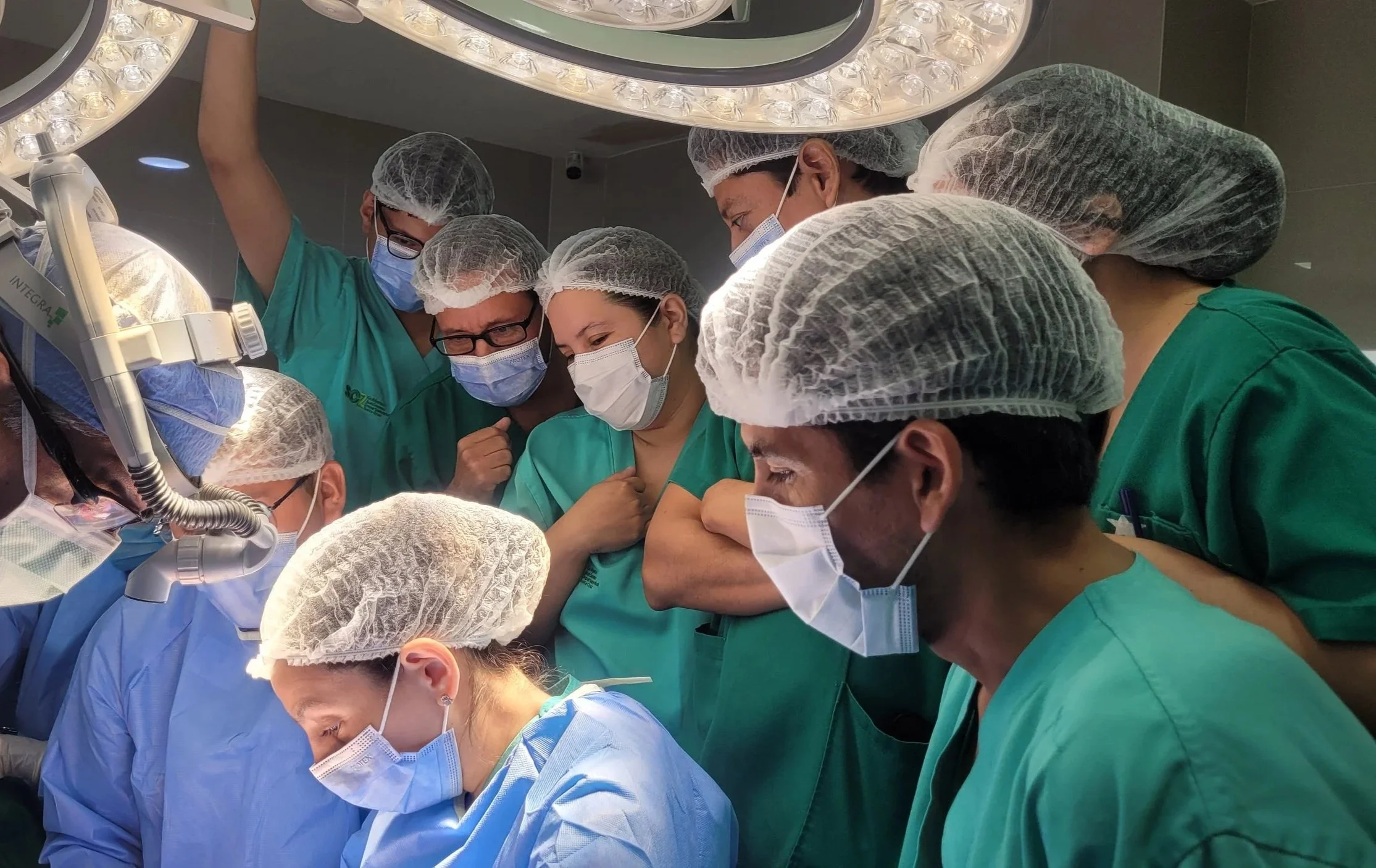
Residents and other surgeons look on during a Whipple procedure
Solidarity Bridge Missioner Dr. Malcolm Bilimoria, Director of the Illinois Center for Pancreatic and Hepatobiliary Diseases at Endeavor Healthcare, is considered the preeminent expert in Whipple surgeries in Illinois, having performed over 3,000 Whipples. Dr. Bilimoria has participated in 15 Solidarity Bridge mission trips dating back to 2008. During those early years, he collaborated with local surgeons at the public Gastroenterological Hospital in Cochabamba. Together they planned and performed one of the first Whipple procedures ever done in a public hospital in Bolivia.
Following that first procedure, the local surgical team would schedule Whipple surgeries to coincide with Solidarity Bridge’s annual general surgery mission trips. In the beginning, Dr. Bilimoria and his surgical PAs would perform most of the procedure, explaining it step by step as the local professionals assisted and observed. Over time, the local team took the lead.
When at least one young local surgeon had developed sufficient proficiency to undertake Whipples on her own, our annual mission moved on to the Cancer Institute of Eastern Bolivia, in Santa Cruz. The Cancer Institute performs a couple Whipples a month, mostly led by one attending surgeon who benefited from studying abroad. But she and the surgical residents still greatly benefit from operating alongside Dr. Bilimoria to progressively expand their skills and to learn how to use specialized instruments, sutures, and other supplies provided through our mission trips.
Cancer treatment has evolved considerably in Bolivia since our missions began. On Dr. Bilimoria’s first trip to the Cancer Institute, surgical decision-making was heavily influenced by the scarcity of neoadjuvant therapies in public hospitals in Bolivia, such as chemotherapy or radiation therapy, commonly used in the US before surgery to shrink tumors and/or afterward to target lingering cancer cells. Surgery was often the only treatment option.
Over the past five years, more chemotherapy, radiation and immunotherapy treatments have become available through Bolivia’s public healthcare system, while a new generation of younger doctors has taken the lead at the Cancer Institute. It has been a vital time to support the Institute as they adapt to these significant shifts in cancer treatment.
The patients who underwent Whipple surgery on our March 2026 trip included two women ages 65 and 59 and a 44-year-old man. In the case of the fourth patient, a 47-year-old father of three boys ages 4 to 17, upon entering the abdominal cavity the US-Bolivian team found that the tumor itself was inoperable. Rather than a Whipple, they performed a palliative bypass operation that will relieve digestive symptoms but will not greatly extend his life. It was a heartbreaking outcome for everyone involved. Team anesthesiologist Dr. Cheyenne Babcock worked with the Institute’s nurses and anesthesiologists to optimize his pain management plan. Our local colleagues at Puente de Solidaridad continue to accompany him and all the patients treated on our March trip.
Nurse Practitioner Nicole Nichols also joined our March mission trip to support the local nurses caring for patients pre- and post-op, and to educate patients and families on topics such as nutrition and wound care. Our annual Oncological Surgery Mission Trip also provides the opportunity to continually assess and help fill equipment and supply gaps so that the Cancer Institute can perform a variety of complex surgeries year-round. In addition to supplies left at the end of trips, Institute doctors and administrators have access to specialized equipment and supplies stocked at our local warehouse managed by Puente de Solidaridad.
We look forward to continuing these long-term efforts to progressively increase access to complex surgical care for the most vulnerable Bolivian patients.
