
Partners in Patient Care
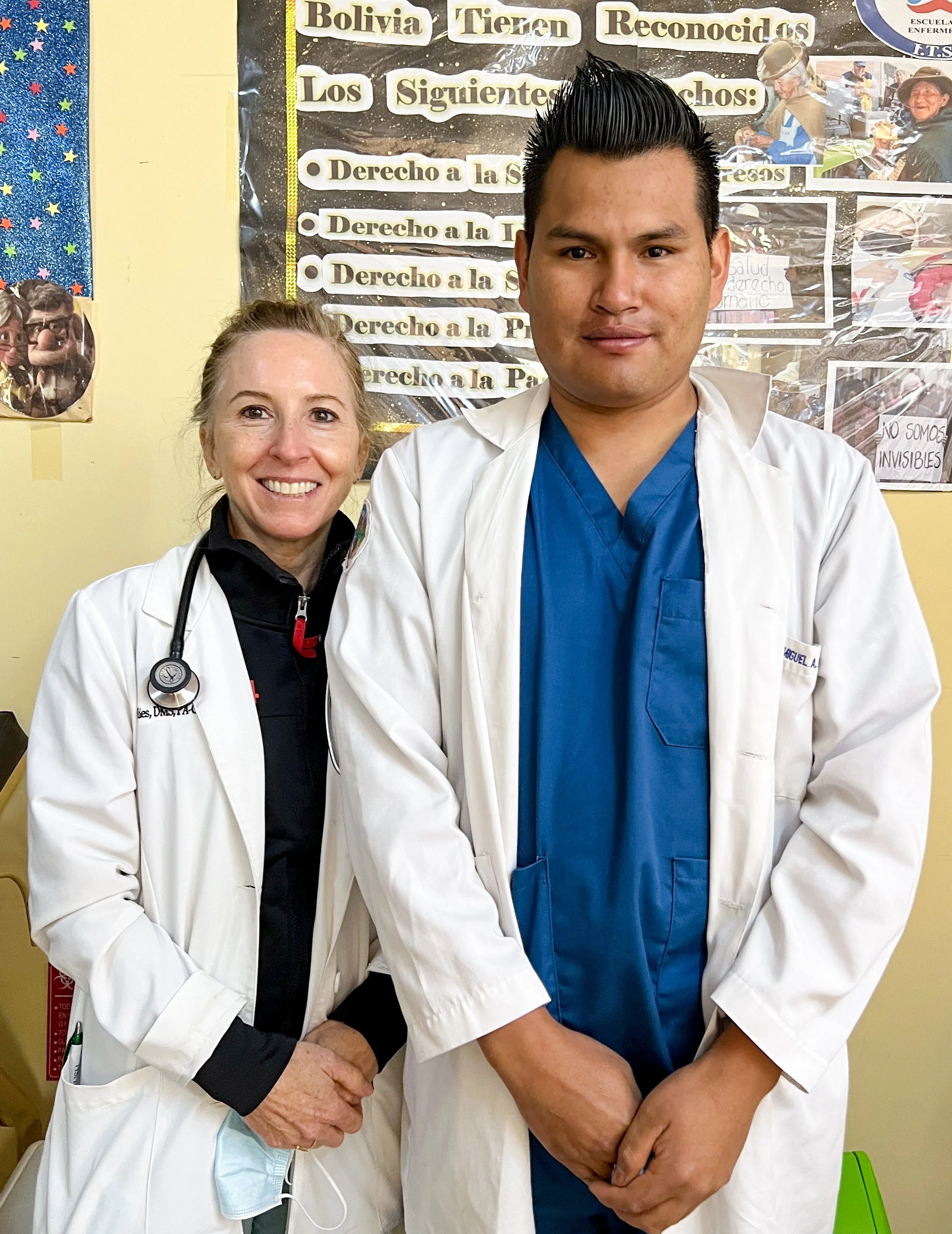
During our September 2025 Multi-Specialty Mission Trip to Bolivia, while most of the team provided care at the Tiquipaya Hospital, several members worked in smaller community clinics. Two-time missioner, Candice Oberlies, PA-C, spent the mission week in a smaller senior care clinic, working alongside the doctor in charge, Dr. Miguel Fuentes.
During her week with Dr. Fuentes, Candice was impressed by the way the clinic is run and the model for continuity of care that it provides geriatric patients living within the urban and rural areas of Tiquipaya. The elderly patients are seen once a month. At these visits, they have their blood pressure checked, get their prescriptions renewed, discuss recent blood/imaging results, new symptoms, and receive protein supplements—protein supplementation is essential as many of these patients live alone and have limited resources with which to purchase meat regularly.
One patient they saw was an elderly woman who came in with knee pain and swelling. They referred her for an X-ray at Tiquipaya Hospital, and when she returned the next day with the results, Candice determined she was a good candidate for a steroid injection. Although Dr. Fuentes does not usually perform this procedure in the clinic, he agreed it was the right course of action, and the woman experienced pain relief afterward. Dr. Fuentes explained that steroid injections are difficult to obtain in primary care because orthopedic specialists typically administer them and can cause blood sugar spikes in diabetic patients. While this patient did not have diabetes, a large percentage of his patients do.
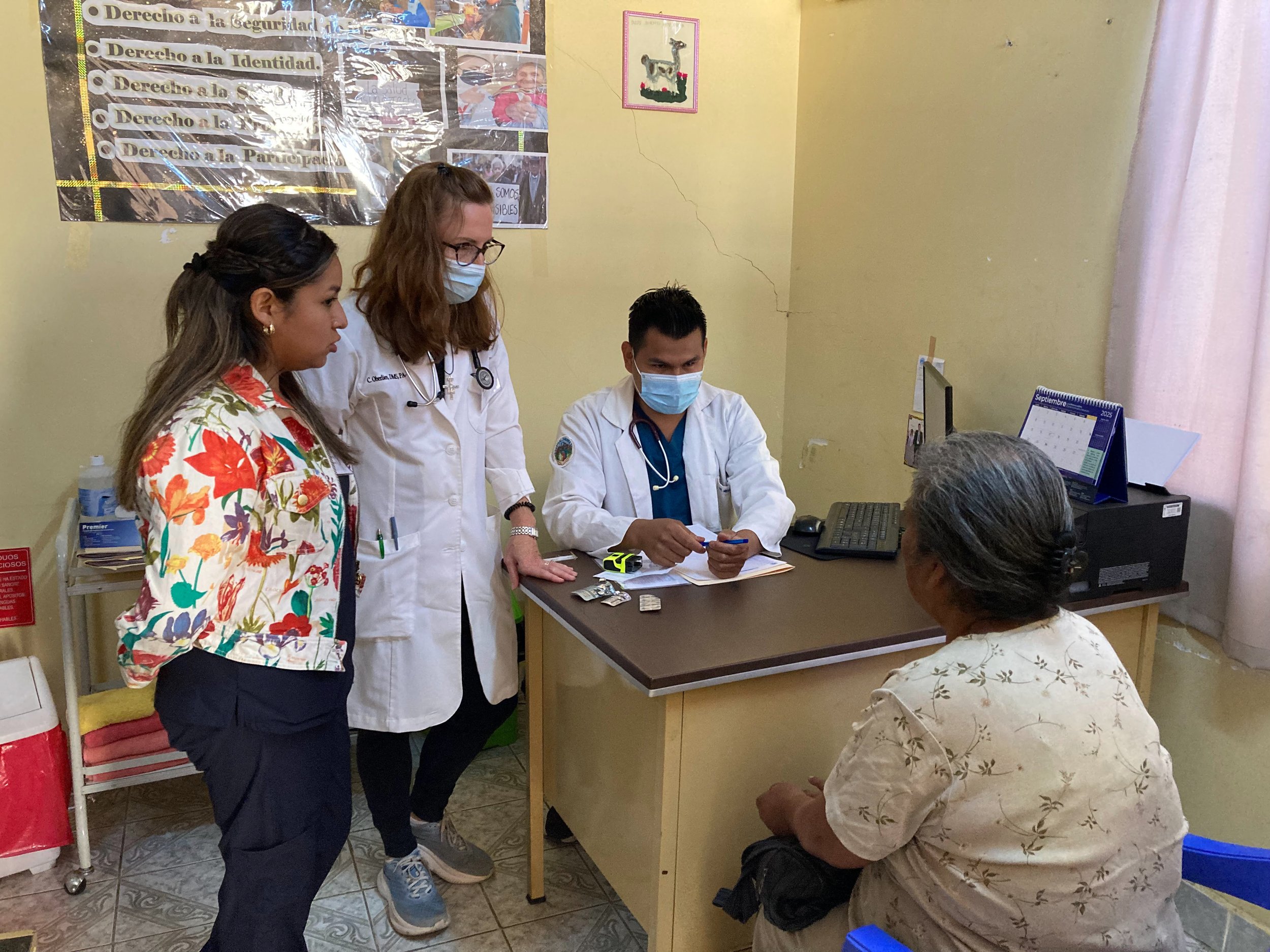
Later in the day, they saw another patient, an older man who came in for his monthly check. He seemed lonely and depressed. Candice spoke to him about his support system, socialization, hobbies, and self-care. After receiving this personalized care and attention from Candice and Dr. Fuentes, the man left feeling a little less alone; his burden seemed lighter.
Candice and Dr. Fuentes spent a good portion of each day together, examining patients, making diagnoses, and consulting on treatment plans. Both agree that there are many benefits to the cross-cultural sharing of knowledge they experienced during their week together.
Candice had the opportunity to learn about the clinic’s model of continuous follow-up care for their seniors, and she was able to share some standard treatments used in the US that are not regularly done in Bolivia. In the US, Candice regularly puts her diabetic patients who are at risk for cardiovascular disease on statins. It helps lower cholesterol and is very heart-protective. Because of differences in evaluating the patients’ A1C and cholesterol levels, this is not routinely done in Bolivia. Dr. Fuentes was interested in learning more about it and was open to trying it with some of his patients.
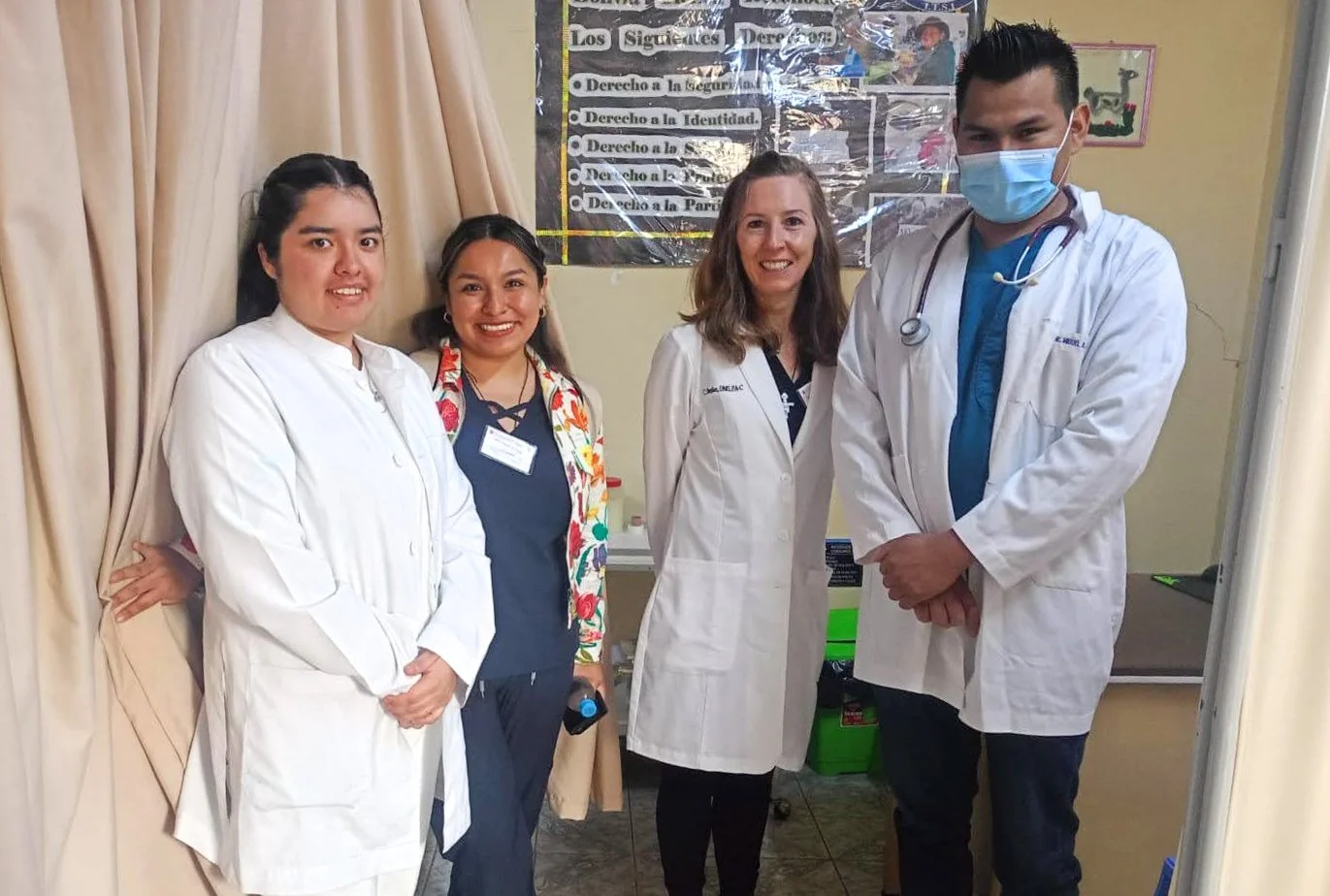
While the patients have benefited from the experience, so have Candice and Dr. Fuentes. Dr. Fuentes shared, “The experience was really amazing. We’ve been sharing treatment plans; some are the same and some are different than in the U.S. ” He continued, “It has been really beneficial for both of us because we have been able to discuss criteria for diseases and how a patient’s presentation for an illness might vary in different regions of the world. I’ve appreciated discussing different approaches to diagnostic and treatment plans. Earlier this morning, we were talking about pneumonia and how you can see different clinical presentations, or maybe even atypical bacteria, which can cause pneumonia. It’s really enriching for both of us to have the learning between our cultures.”
Candice echoed the idea that there was value to being exposed to different types of cases and approaches: “It was educational to see Dr. Fuentes’ patient who had recently been diagnosed with an atypical gastrointestinal parasite. We typically don’t see those infections frequently in the States, but we are starting to see them in our community. To learn from his expertise on how to diagnose and treat patients with these symptoms helps us moving forward as the landscape of our population is starting to change in the US.” Dr. Fuentes agreed, “It’s really important to share this cross -cultural information.”
Turning to Dr. Fuentes, Candice told him, “When I think about this experience, I am most impressed with your bedside manner. You are empathic, compassionate, and extremely invested in your patients’ well-being. You know your patients’ health histories by memory, and you make them all feel valued, important, and heard. It is admirable seeing all of these qualities in a provider, let alone in such a young doctor.”
When asked if he would be interested in participating in this type of cross-cultural medical exchange in the future, Dr. Fuentes responded immediately, “Of course, yes, gladly!” In the meantime, patients in both Bolivia and the US will benefit from the rich exchange of knowledge that Candice and Dr. Fuentes shared during their time working together in Tiquipaya.
