
When Care Comes Before Surgery: Simon’s Story
“I’ve learned that people will forget what you said, people will forget what you did, but people will never forget how you made them feel.” - Maya Angelou
By Joe Sherman, Chaplain on the Neurotrauma Mission Trip
Sometimes, success is not defined by a successful surgical outcome but by having the courage to make difficult decisions that protect patients’ lives.
As last year’s Neurotrauma Mission Trip began, Simon was waiting with his mother outside the neurosurgery clinic for his chance to be seen by the Solidarity Bridge Neurosurgery & Neurology Institute (NNI) team for his pre-op screening evaluation.
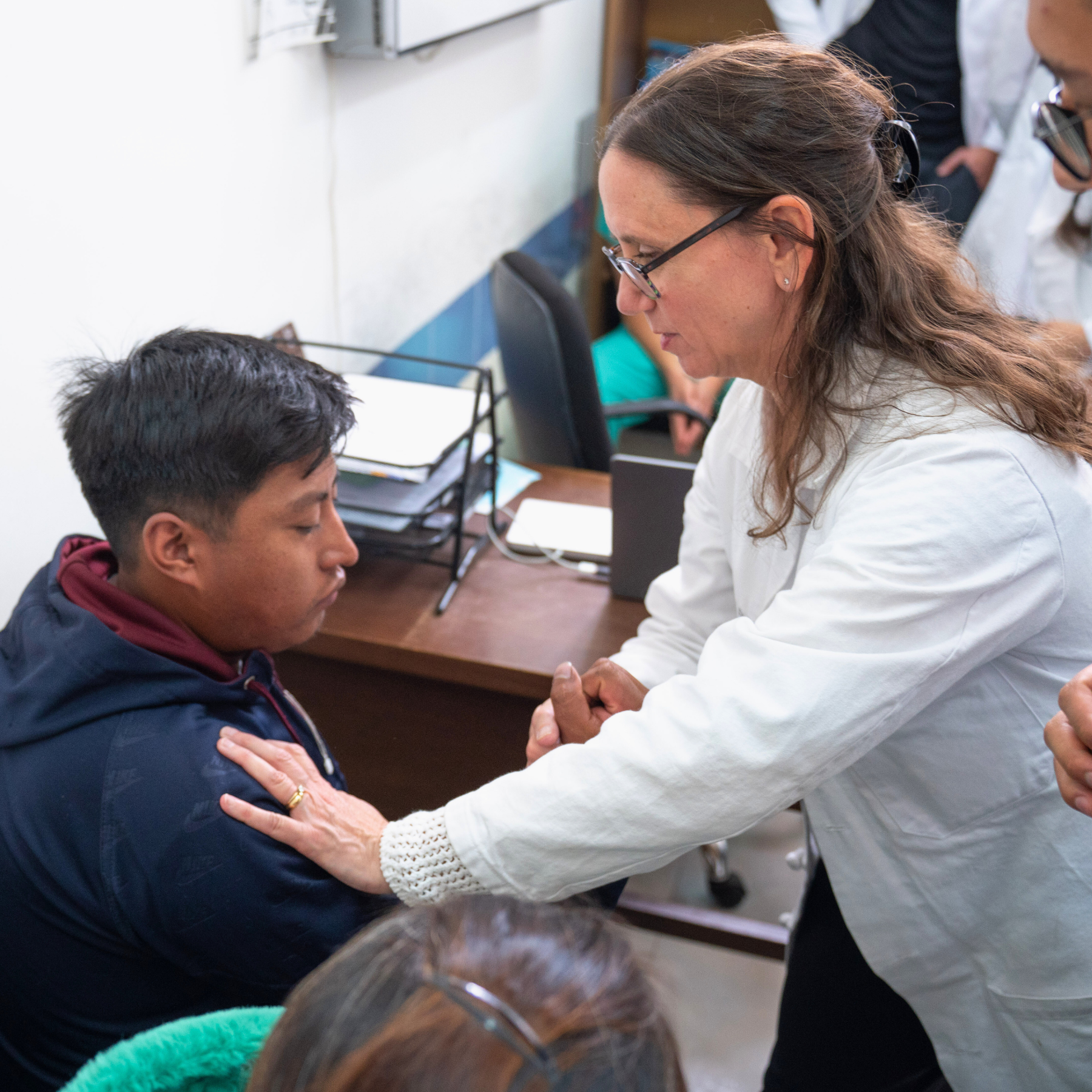
This was a familiar experience for him and his mother. They had been in the same place the previous year on the second day of our mission trip at the Santa Barbara Hospital, in Sucre, Bolivia. At that time, they had taken the 4-hour bus ride to Sucre from their home in Potosi, sleeping in the courtyard of the hospital the night before, hoping to see a neurosurgeon from our team who might relieve the unrelenting pain Simon suffered from Trigeminal Neuralgia. However, the surgical schedule for the week was already full. They were told that they would have to wait until the mission trip next year.
Before last year’s Neurotrauma Mission trip, Simon’s case was reviewed extensively during pre-trip conferences by the joint U.S.–Bolivian NNI team. Everyone agreed he should be offered the surgery that could bring him lasting relief.
At last, Simon’s opportunity had arrived. As the mission week began, he was evaluated by both U.S. and Bolivian neurosurgeons and scheduled for surgery later in the week. But once again, his hopes were unexpectedly delayed.
Upon seeing Simon during their routine pre-op anesthesia evaluation, Dr. Julio Montejano and Dr. Lucas Suazo from the US NNI team, along with Dr. Nadid Linares, their Bolivian colleague, noticed that his skin had a purple hue and he had distal clubbing of his fingers. As they discussed these and other physical exam findings, they suspected polycythemia, a condition where a patient produces an abnormally high number of red blood cells. The “thick blood” caused by too many red blood cells could lead to complications of stroke and other serious conditions during and after the surgery.
The team acted quickly to get Cardiology and Hematology consults from the Bolivian specialists in the hospital. Everyone on the team wanted Simon to get the surgery he had been waiting for to relieve his pain. Despite our best efforts, it was the opinion of the specialists that it would be too dangerous to operate on Simon this week. He needed further diagnostic testing and treatment before proceeding to surgery to help prevent any complications.
Needless to say, Simon and his mother were extremely sad to hear the news. However, Simon began to get the treatment he needed for his polycythemia and began to feel better.
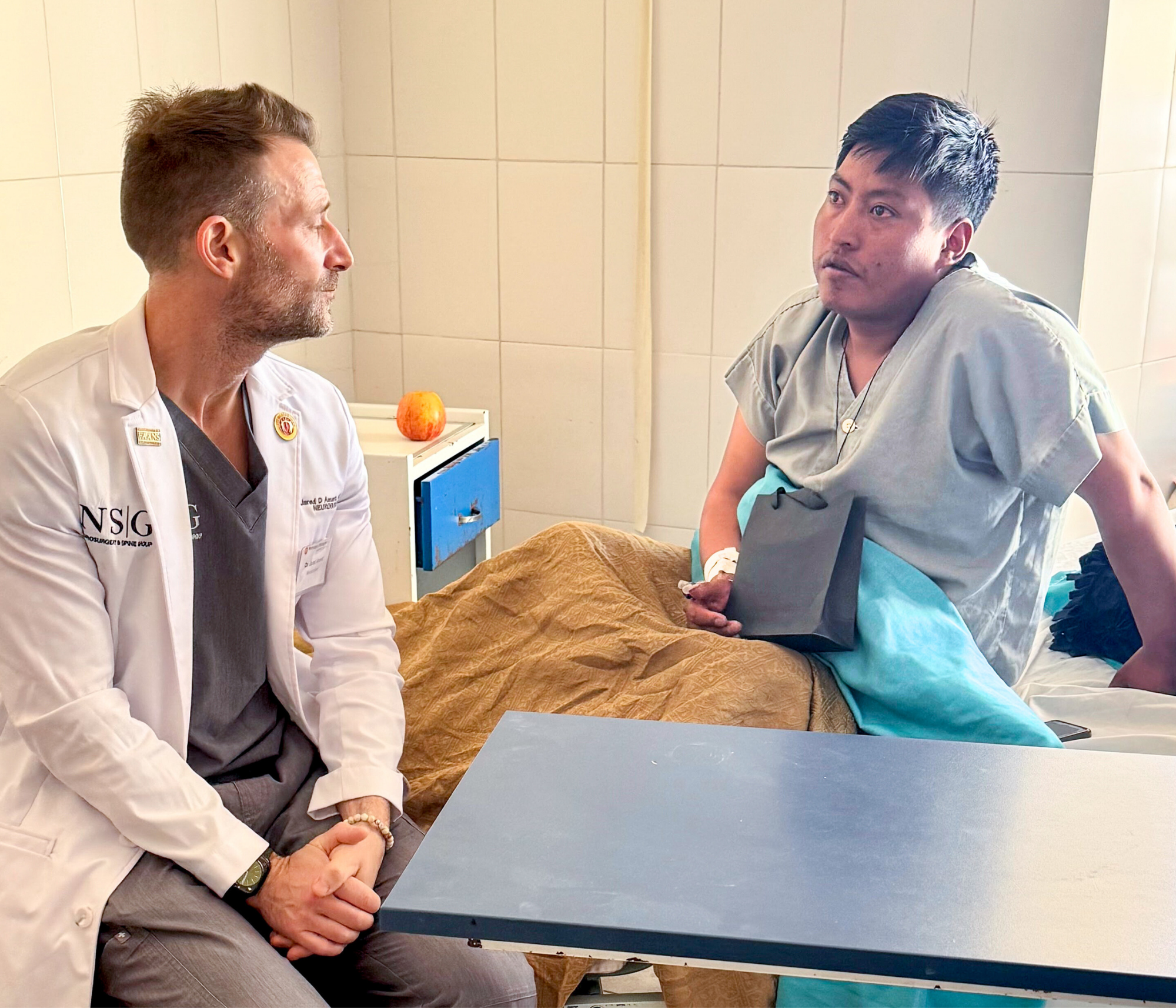
Later in the week, the US and Bolivian surgical and anesthesiology teams arrived on the Neurosurgery ward to talk about the situation with Simon and his mother and to discuss the plan to treat his polycythemia instead of operating. Simon waved to one of the lead surgeons, Dr. Ament, as he approached the bed. Simon looked much better and felt much less anxious. Dr. Ament told him how disappointed he was that the team couldn’t perform the surgery to relieve Simon of his pain. Simon listened carefully as the Bolivian and US Neurosurgeons committed to keeping in contact and treating him throughout the year and, if Simon still needed and wanted the surgery next year, the team would be there to perform it on the 2026 Fall mission trip.
Simon and his mother accepted the news with great relief. Later, Simon sent a message to Dr. Ament who left him his personal cell phone number. It said,
“Have a good trip, doctor. I hope you return next year with good results and can perform a successful surgery. Greetings to your family and hugs to everyone. Thank you, Simon.”
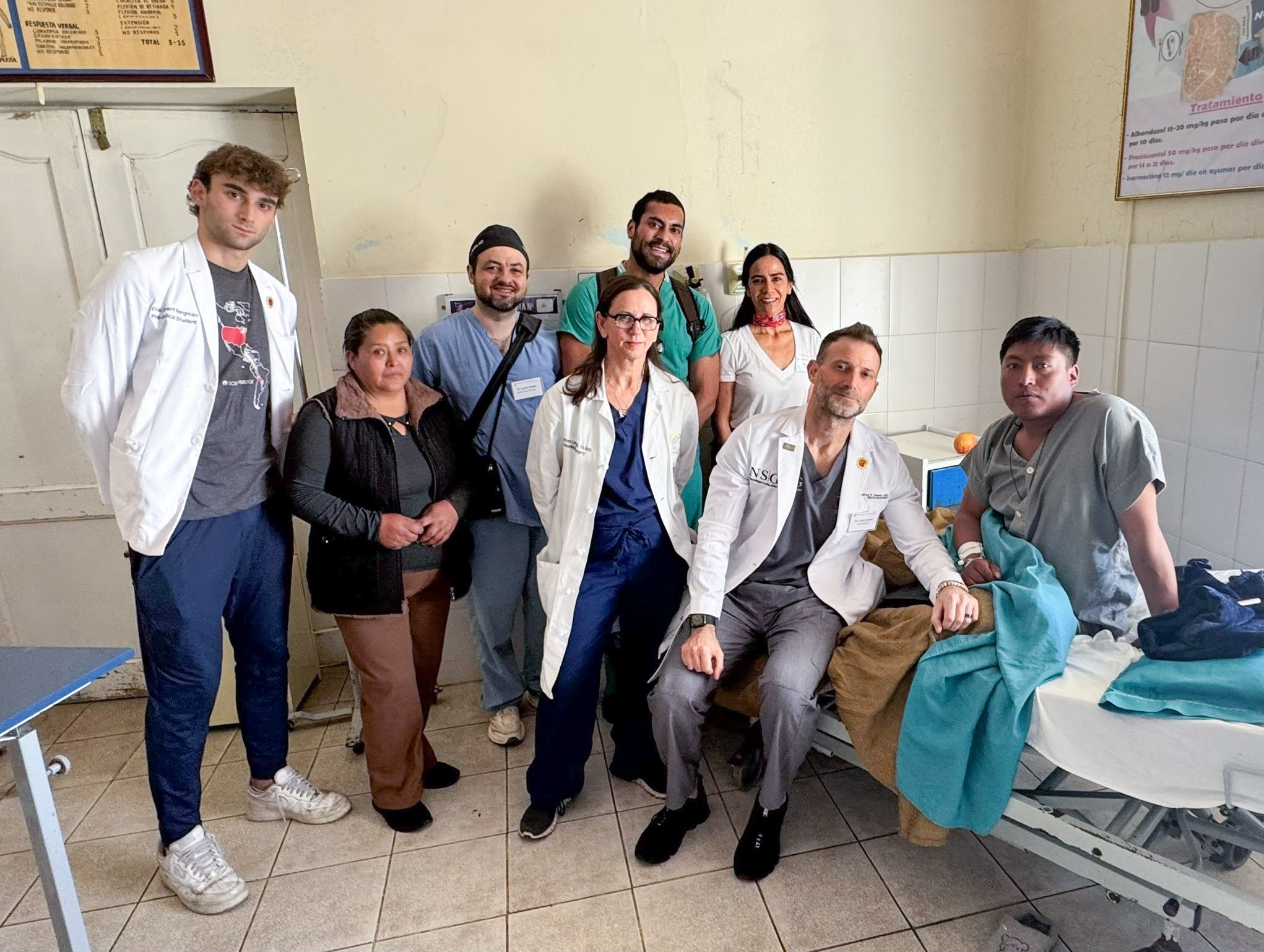
Simon’s story is not one we share often. We are usually eager to celebrate successful surgeries that relieve suffering and restore health. Yet on every mission trip, there are moments when our greatest responsibility is not to operate, but to pause. These are the moments that require the hardest decisions—when compassion must be guided by caution, and when doing what is right for the patient means choosing not to proceed.
While surgery can offer life-changing benefits, it also carries inherent risk. For this reason, our teams uphold the highest ethical standards and review each patient’s case through collaborative discussion and thorough medical assessment. Every decision to operate is made collectively by physicians who weigh the potential benefits against the risks, always guided by one principle above all others: ensuring the greatest possible chance of success while protecting the life and safety of the patient.
We are happy to report that now, four months later, Simon has been taking treatment for polycythemia and is doing very well. He and our team are both optimistic that we will be able to finally operate on him during this year’s Fall mission trip to relieve his Trigeminal Neuralgia pain.
*The patient name has been changed to preserve his privacy
