
Listen, Learn, Love: Reflections On My First Solidarity Bridge Mission Trip
By Shelley Bacastow
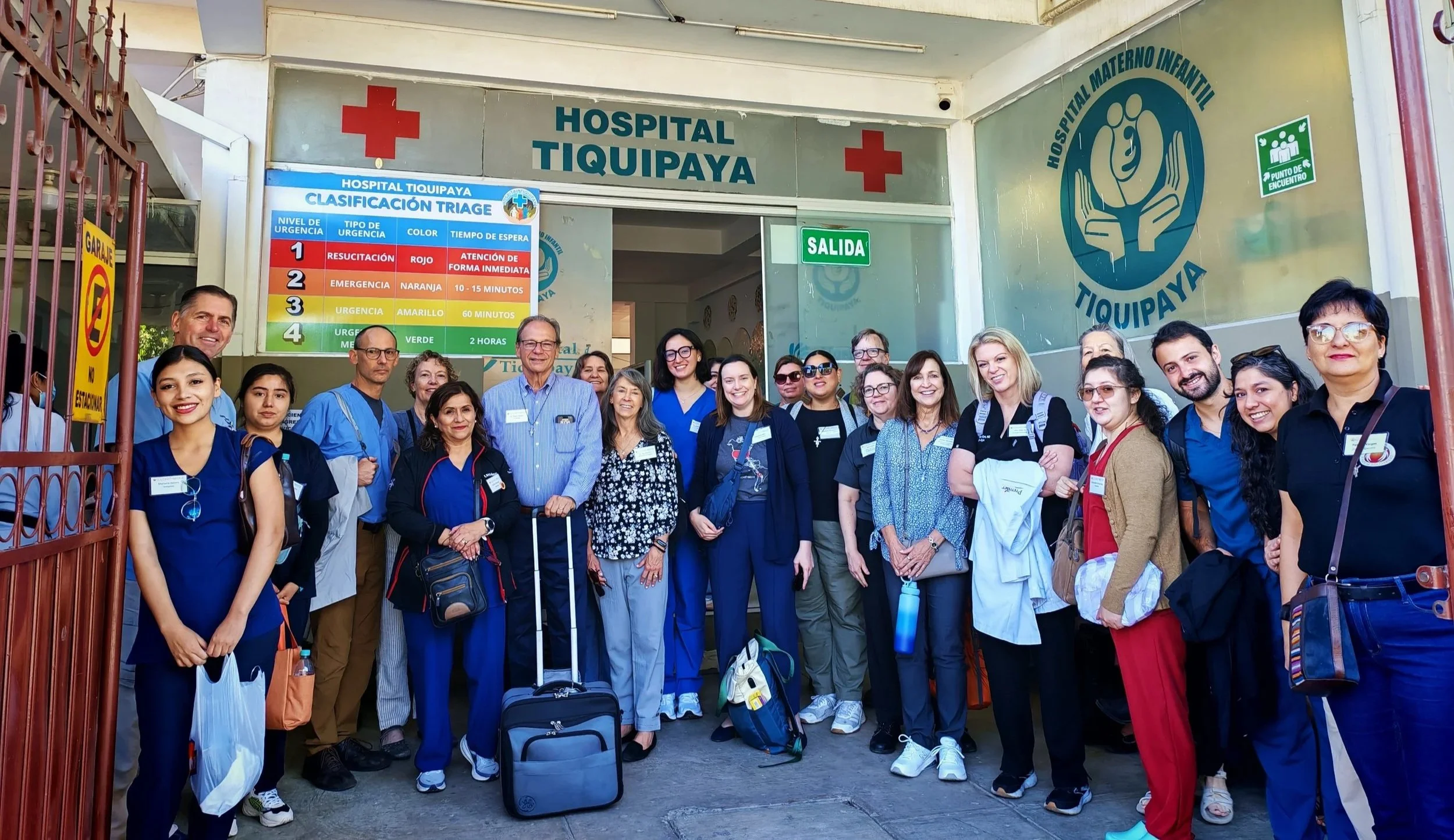
The Multi-Specialty Mission Trip (MSMT) team outside of the Tiquipaya Hospital.
I had a unique opportunity to step outside my daily life and to listen, learn, and bear witness to true love on my recent mission trip with the Solidarity Bridge team to Tiquipaya, Bolivia, where we were hosted by our sister organization, Puente de Solidaridad (PdS).
Listen
On the more than ten hours of flight time as well as layovers and shared meals, I listened to the stories of my fellow missioners about their life journeys that led to the practice of medicine and their reasons for participating in this mission trip.
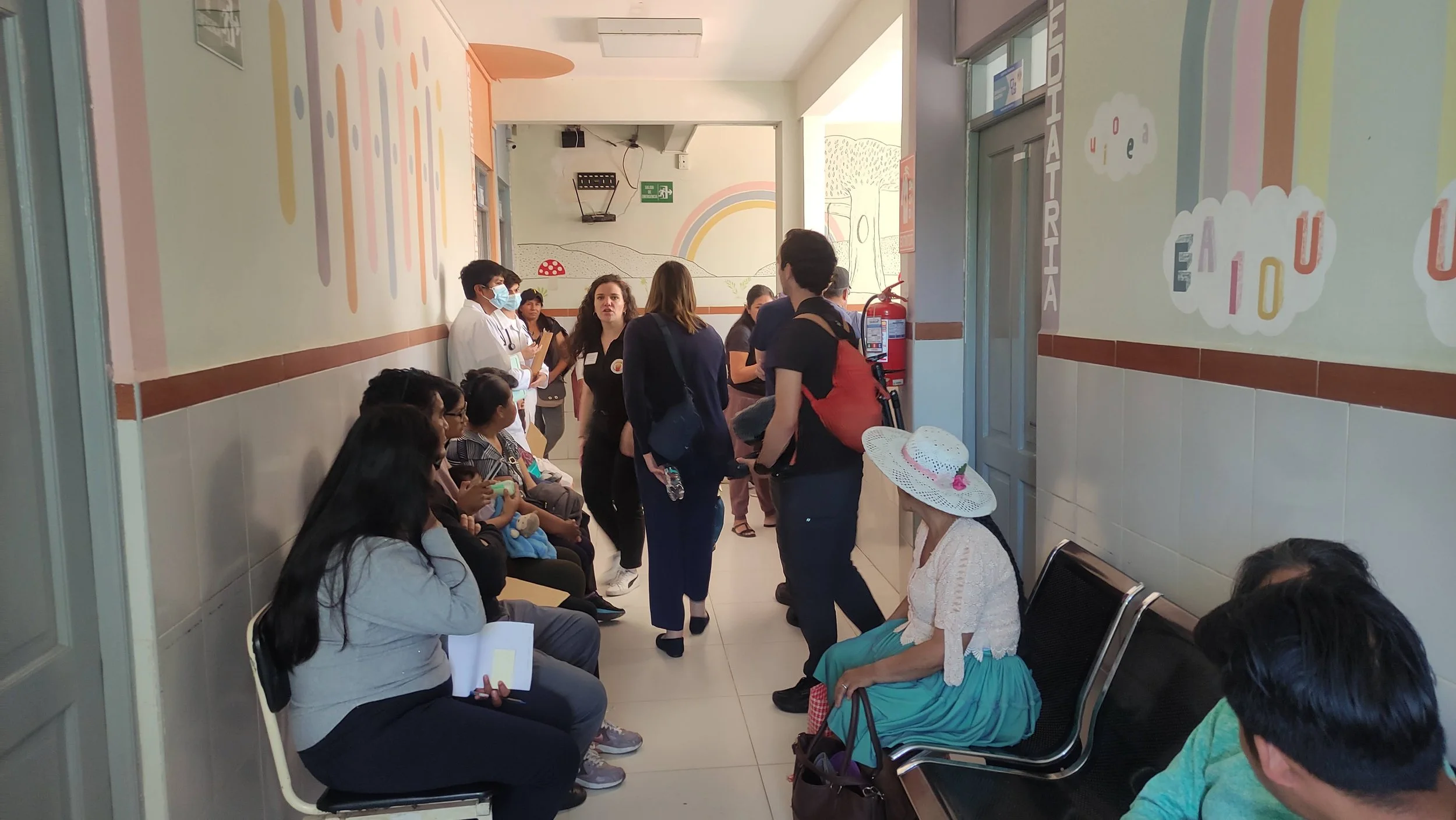
Patients in the waiting area at Tiquipaya Hospital.
Upon arrival at Tiquipaya Hospital, I listened to the cacophony of sounds, including the voices of anxious patients and family in the waiting rooms, the cry of infants, the calls for the next patient, the hum of machines and the scurry of nurses trying to make their way through the labyrinth of narrow hallways and crowded rooms to deliver their services.
I listened to medical students tell the story of their education, express dreams for their future careers, and explain the winding and uncertain path to becoming a physician in Bolivia.
I listened to the assessments given by PdS employees of the stability of the country, state of medical care, greatest needs of area hospitals, and challenges in distribution of medical supplies—particularly to very small clinics in remote areas.
I listened to the executive directors of two area hospitals explain the needs of their patients and the unique diseases, afflictions, and challenges their patients face.
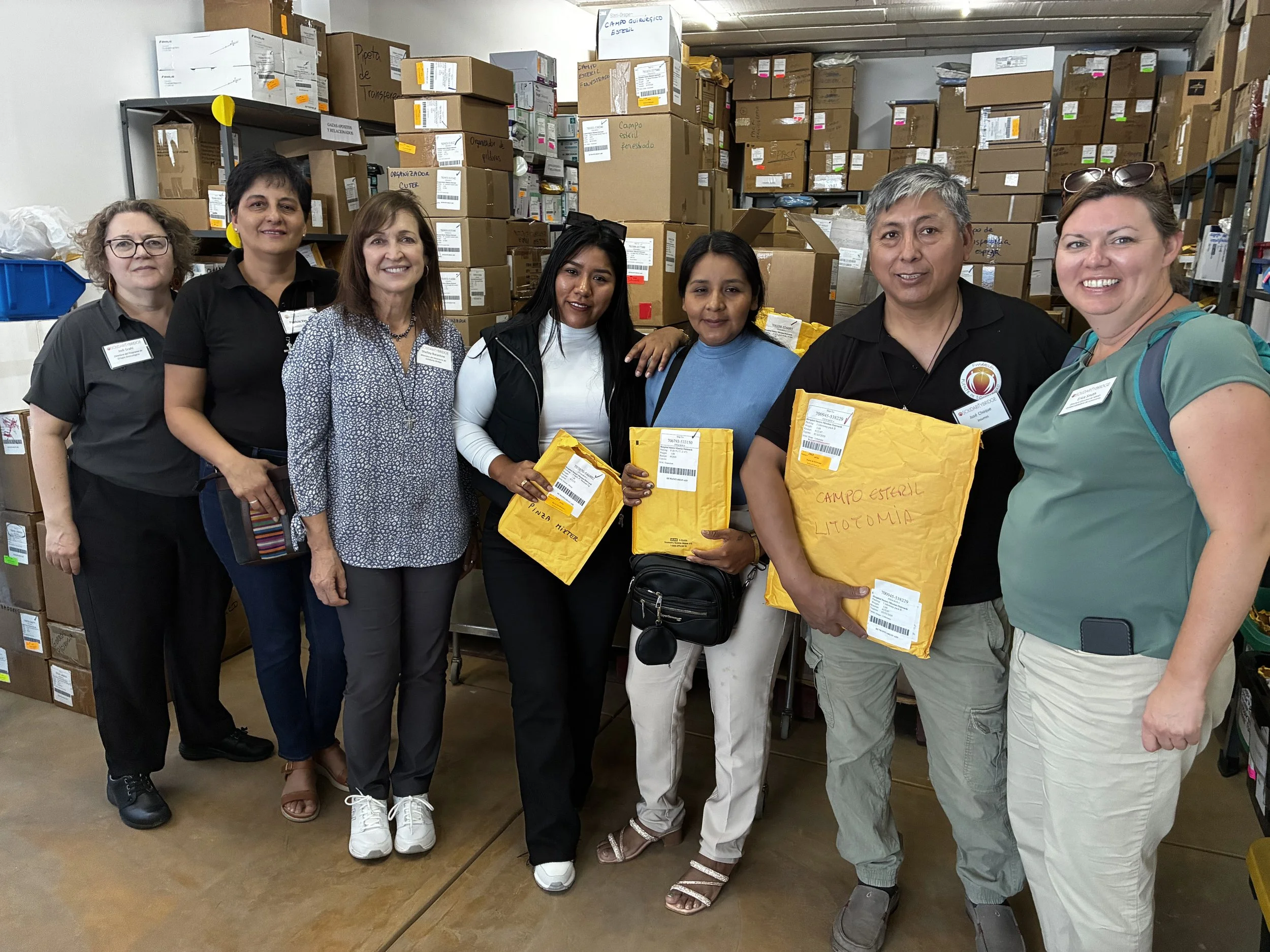
Shelley (third from left) visiting the supply warehouse with the team.
Learn
Listening begets learning. I learned much about the way of life and culture in the Cochabamba and Tiquipaya area, the importance of extended family, the prevalence of the “informal” economy, and even the reasons for the vast difference in clothing from jeans, hoodies, and gym shoes—like in every American city—to a variety of indigenous clothing.
Mostly though, I learned about the challenges of the Bolivian medical system faced by their physicians every day from lack of medical supplies and equipment (partly because many seemingly mundane types are not sold by manufacturers or their distributors in Bolivia), to the lack of operating rooms (or sometimes the OR bed, lighting, or equipment necessary to use the room effectively) to the lack of access to prescription drugs commonly used in the United States.
I learned from our mission physicians of their admiration for their Bolivian counterpart physicians who do so much for their patients with their very limited resources.
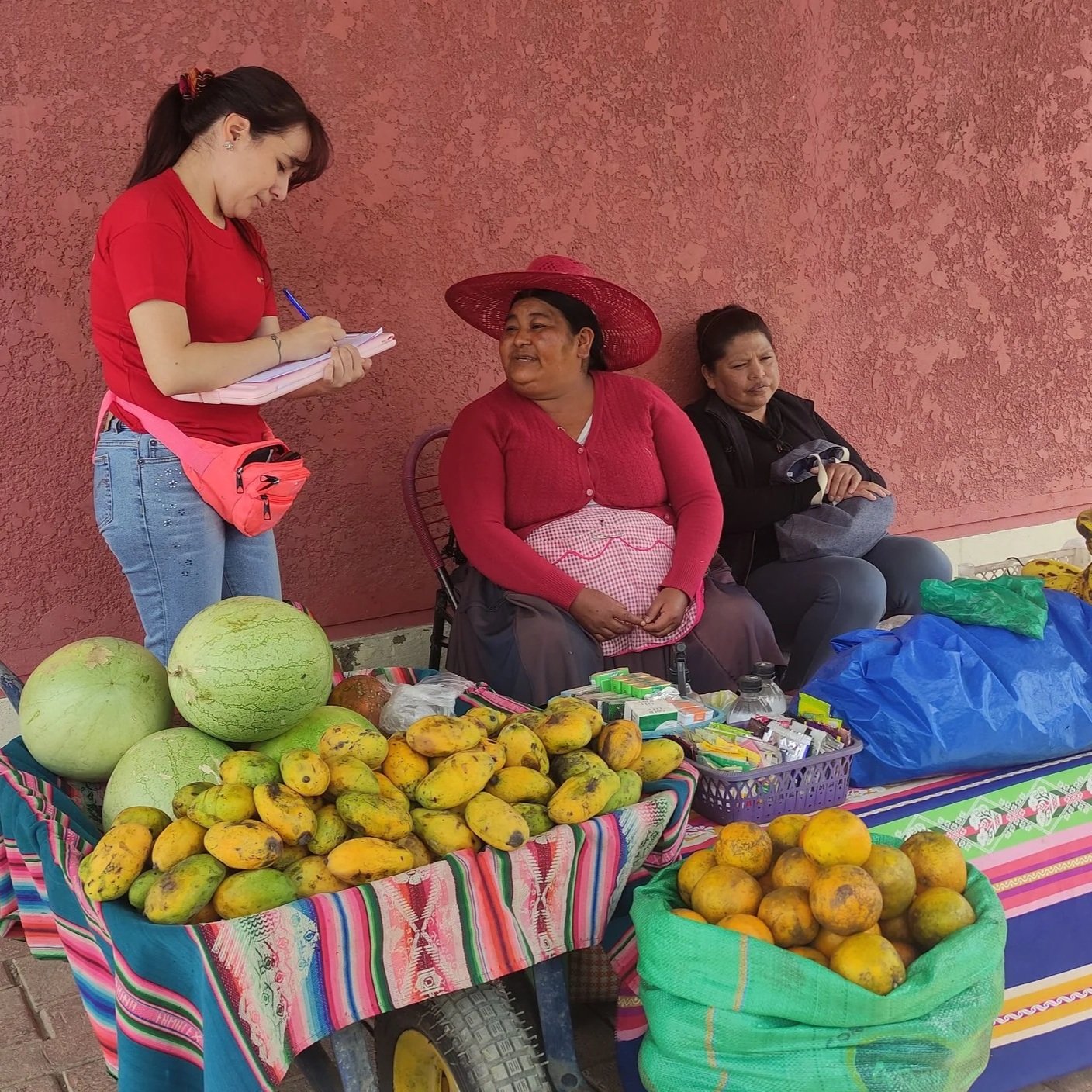
Puente de Solidaridad social worker, Carmen, visiting a patient.
And I learned from PdS how they receive our container shipment, unload it through a human chain, scan the bar codes, organize and store it, and distribute the medical supplies through a variety of methods. While I was at the PdS warehouse, I saw two women from a small clinic in the remote northwest corner of Bolivia choosing supplies for their clinic, balancing their needs with the fact that a leg of their two-day journey required transporting these materials by canoe.
Love
From the first stop at the PdS office on the way to Tiquipaya from the airport, I witnessed the love and respect that the PdS and Solidarity Bridge staff and missioners have for each other. I have to admit that I was a bit overwhelmed at being hugged and kissed by more people in the first ten minutes of our arrival than in an entire year at home (other than family members of course). And it felt good because their warm welcome expressed their happiness at seeing the Solidarity Bridge team, which shares in their important mission, and their gratitude for the expertise our physicians would share, the medical equipment missioners brought on our flights and left with them, and the ongoing support made possible by our donors and outreach efforts.
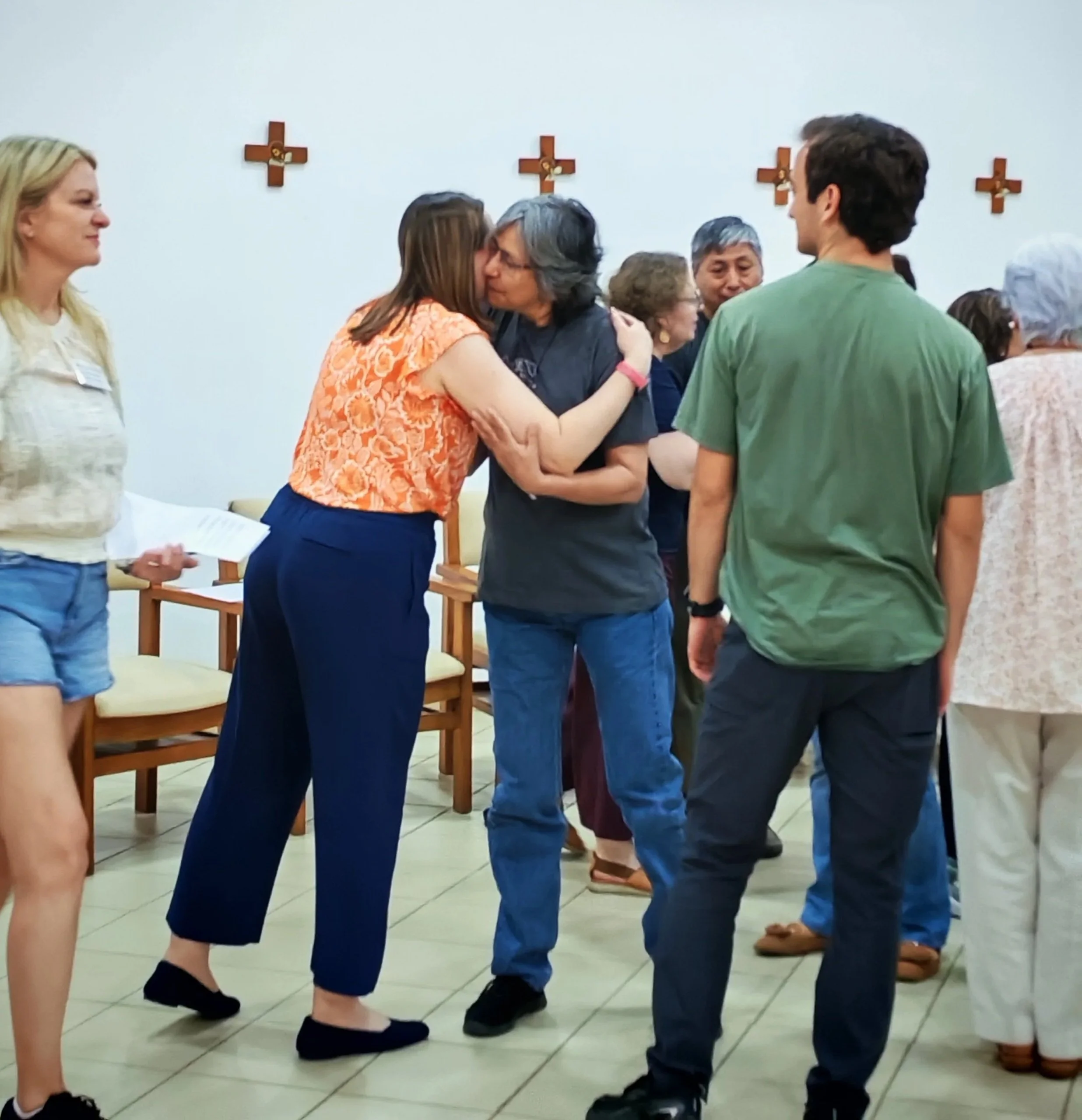
Solidarity Bridge and Puente de Solidaridad teams greeting each other during the opening ceremony.
I subsequently accompanied a PdS social worker on two home visits with patients to update their physical and financial status, provide information about their surgery and the admission process the following day, answer questions, assure them that they are not alone in their journey to health, confirm that the family understands the patient’s need for rest and recovery post-operation, and pray with them to ease their nervousness.
I witnessed the love of family in contributing financially to the cost of the medical procedure for their sibling or cousin and I wondered if we Americans could learn from that. I witnessed Bolivian doctors’ love of their patients.
And throughout my entire trip, I witnessed the love Bolivians have for their remarkably beautiful and mountainous country.
