
By Ted Johnson, Chaplain
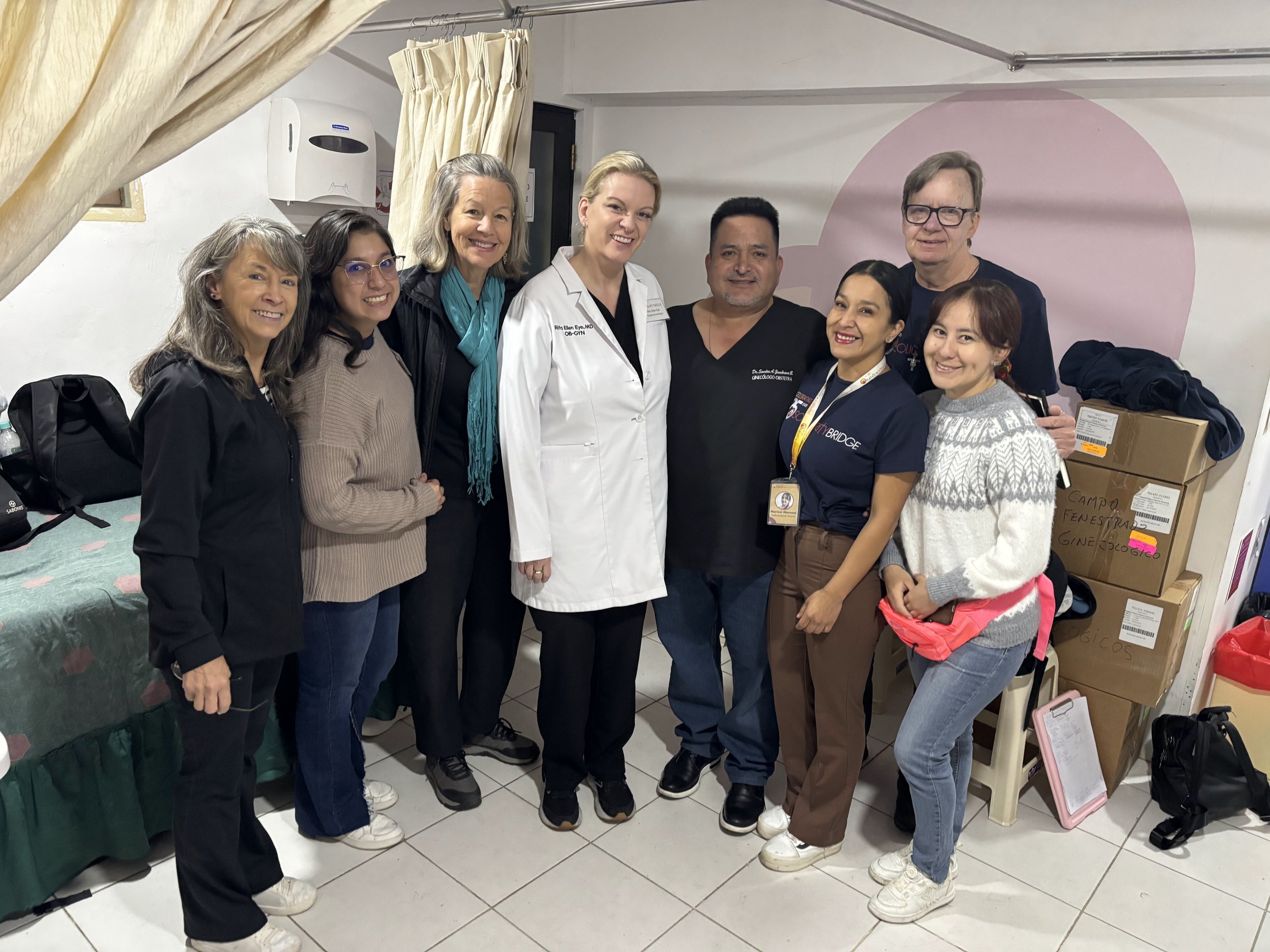
Chaplain Ted Johnson (on right) with the Solidarity Bridge team and local partners.
The first time I was introduced to Julia, I was doing “rounds” with Marcela – visiting the surgical patients who were part of our Multi-Specialty Mission Trip. Marcela is the patient chaplain for our Bolivian sister organization, Puente de Solidaridad, and I was the chaplain on behalf of our Solidarity Bridge team. We worked together to spiritually and emotionally support the patients, their families, and the mission team itself throughout the intense week of treatment and patient care.
We entered the four-bed ward where three women were sitting in their beds. The fourth, Julia, was lying down with the blanket over her head. Julia had undergone a laparoscopic hysterectomy the previous day. Today, she will be seen by the surgeon to confirm whether she is ready for discharge.
Julia is a young Guaraní woman who lives in a rural community in northeastern Bolivia with her five children and husband. She runs a small convenience store and her husband is a farmer.
After urging from her family, she undertook the two-day journey to Tiquipaya, where Solidarity Bridge’s Multi-Specialty team would partner with local healthcare providers to treat hundreds of patients throughout the week. She came seeking care for a gynecologic condition that was affecting her health and daily life.
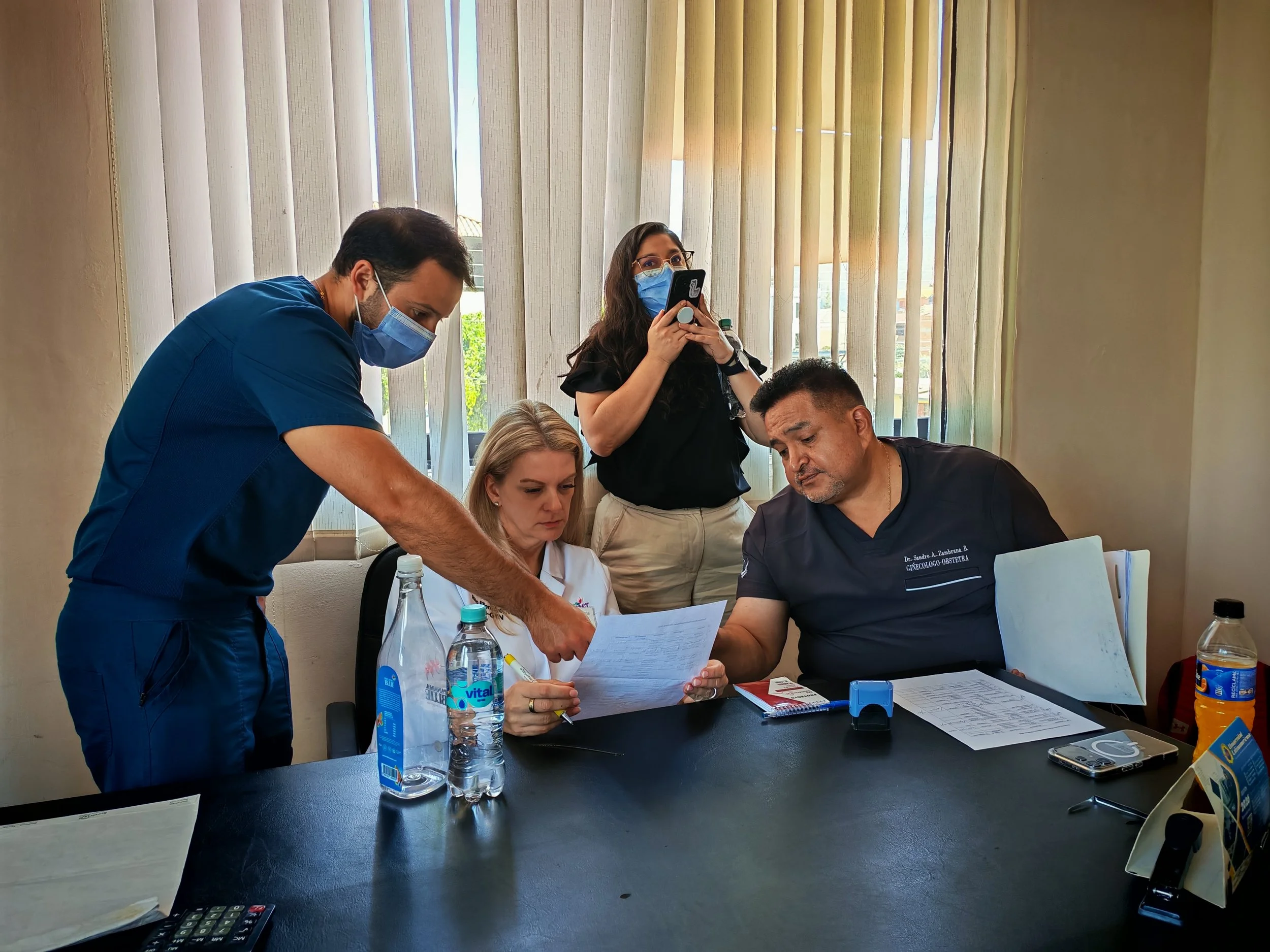
Dr. Ellen Eye with Dr. Zambrana (on right), reviewing patient cases.
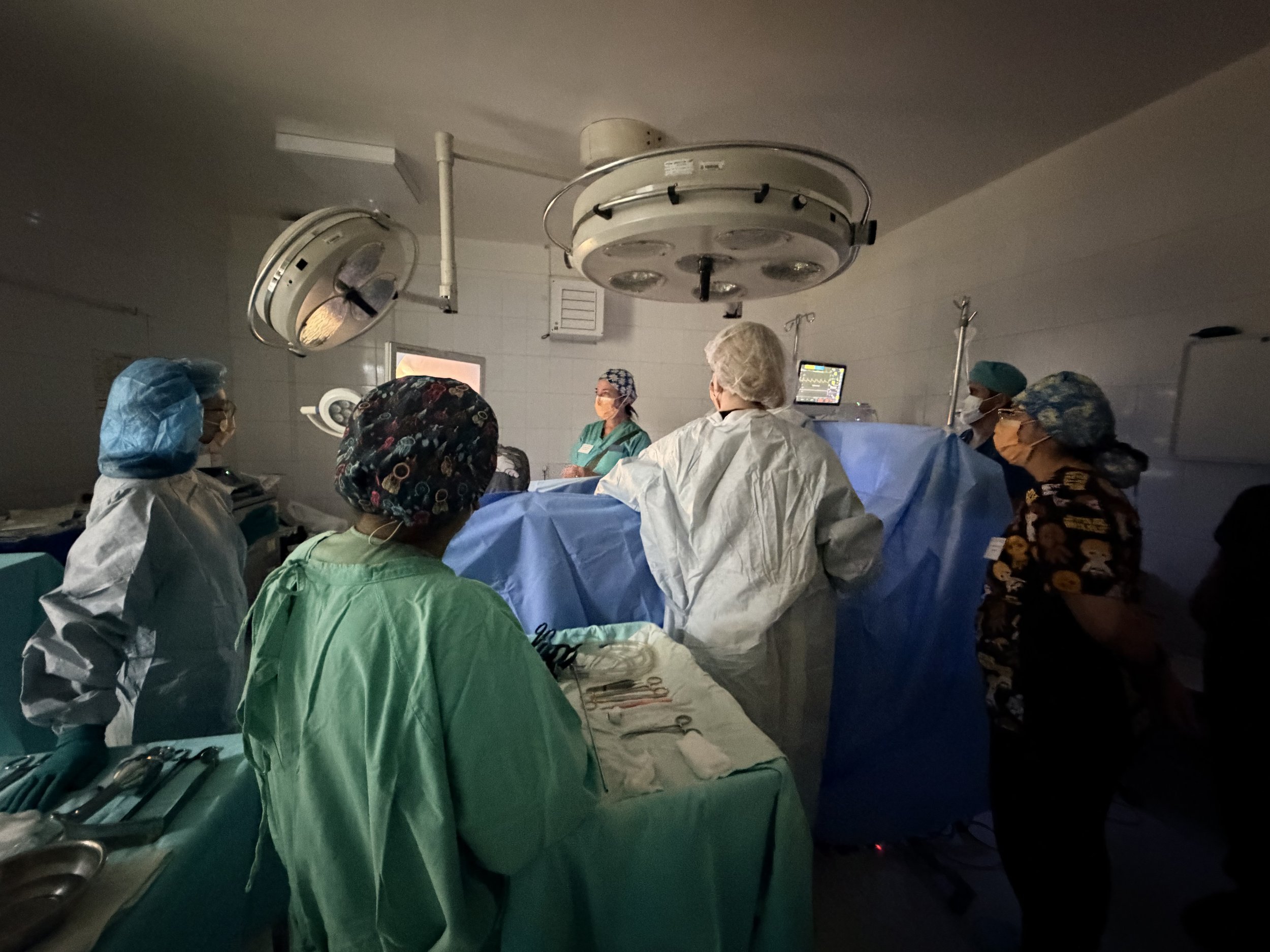
Shortly after arriving in Tiquiapaya, Julia was evaluated by Dr. Zambrana, a local surgeon at the Tiquipaya Hospital. After conducting an evaluation and lab tests, he determined that she needed surgery. He also explained that she might require a second surgery to address a possible prolapse. He referred her to our mission team, where her case was reviewed and she was scheduled for surgery later that week.
Marcela and I returned to the hospital ward when we saw Dr. Ellen Eye, the gynecologic surgeon who performed Julia’s surgery, enter her room. Dr. Eye explained to Julia and her mother that the surgery went smoothly and that she could go home. Julia still looked sad after receiving this good news. The doctor asked her if she had any questions. Julia found her voice and asked about the possibility of needing another surgery. Ellen smiled and said that a second surgery was no longer necessary. After the doctor’s words were translated, and Julia understood what was being said, her entire affect changed. The woman resting under her blankets sat up with a bright smile and was eager to dress and go back home with her mother.
Julia’s experience was a reminder of how important it is not only to provide surgical care, but also to ensure that patients understand their treatment and have the opportunity to ask questions. We are reminded of how important these health campaigns are for patients, many of whom travel great distances in search of treatment and relief. In the case of Julia, this surgery promised to change her day-to-day life. After a couple weeks of rest and recovery, Julia should now live disability-free, healthy and present for her young children and family.
*Patient name has been changed.
