
Why We Go
By Nicole Nichols, APRN
Why go on a medical mission trip?
I have just returned from my second medical mission trip—my first was only a year ago. As I reflect on these experiences, I find myself thinking about how this journey even began.
About 18 months ago, Dr. Malcolm Bilimoria invited me to join his yearly oncological surgery mission trip to the Oncological Institute of Eastern Bolivia in Santa Cruz. Did I hesitate? Not for a moment. The chance to travel abroad, collaborate with other healthcare professionals, and care for patients in need felt like an incredible opportunity.
Most of us in healthcare share a common purpose: We are here to serve others. It’s the reason we chose this path.
Expectation vs. Reality
From the beginning, I chose not to set expectations. I had never participated in a medical mission before, so I didn’t pretend to know what it would be like. Instead, I committed to fully immersing myself in the experience and learning from the trip leaders and seasoned missioners.
Letting go of expectations allowed me to step outside my comfort zone in ways I hadn’t anticipated. The reality was humbling—I entered an unfamiliar environment where I didn’t speak the language, resources were limited, and patients and their families placed immense trust in us.
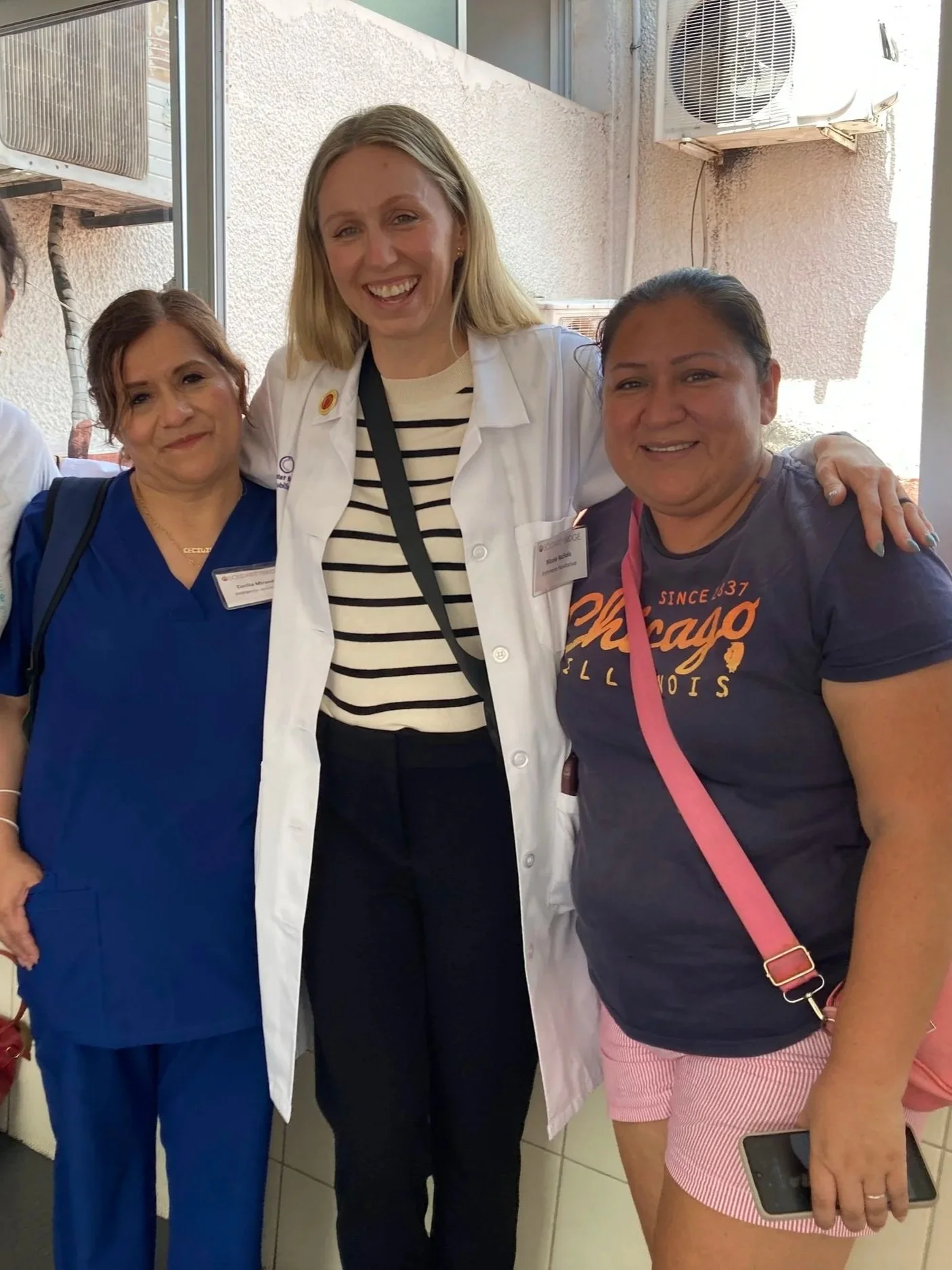
Nicole with a patient’s daughter (on right) and Cecilia, her paired volunteer interpreter (on left)
The Work Itself
My role on these trips was to collaborate with the nursing staff and provide patients and their families with discharge education. I quickly learned that formal discharge teaching is not always standard practice, often due to limited staffing and resources.
While every patient—both in the U.S. and Bolivia—is unique, the foundation of education remains similar. Still, each person learns differently, asks different questions, and requires individualized attention. It reinforced the importance of patience, adaptability, and presence.
This year I was incredibly fortunate to work alongside Cecilia Miranda –Ceci– my assigned volunteer interpreter. We could not have been better matched. Her kindness and empathy were evident in every interaction. She called herself my “shadow,” and I often referred to her as my “Bolivian mother.” Together, we visited each patient daily—sometimes multiple times—answering questions, helping them up and out of bed, and offering reassurance. I truly could not have done this work without her.
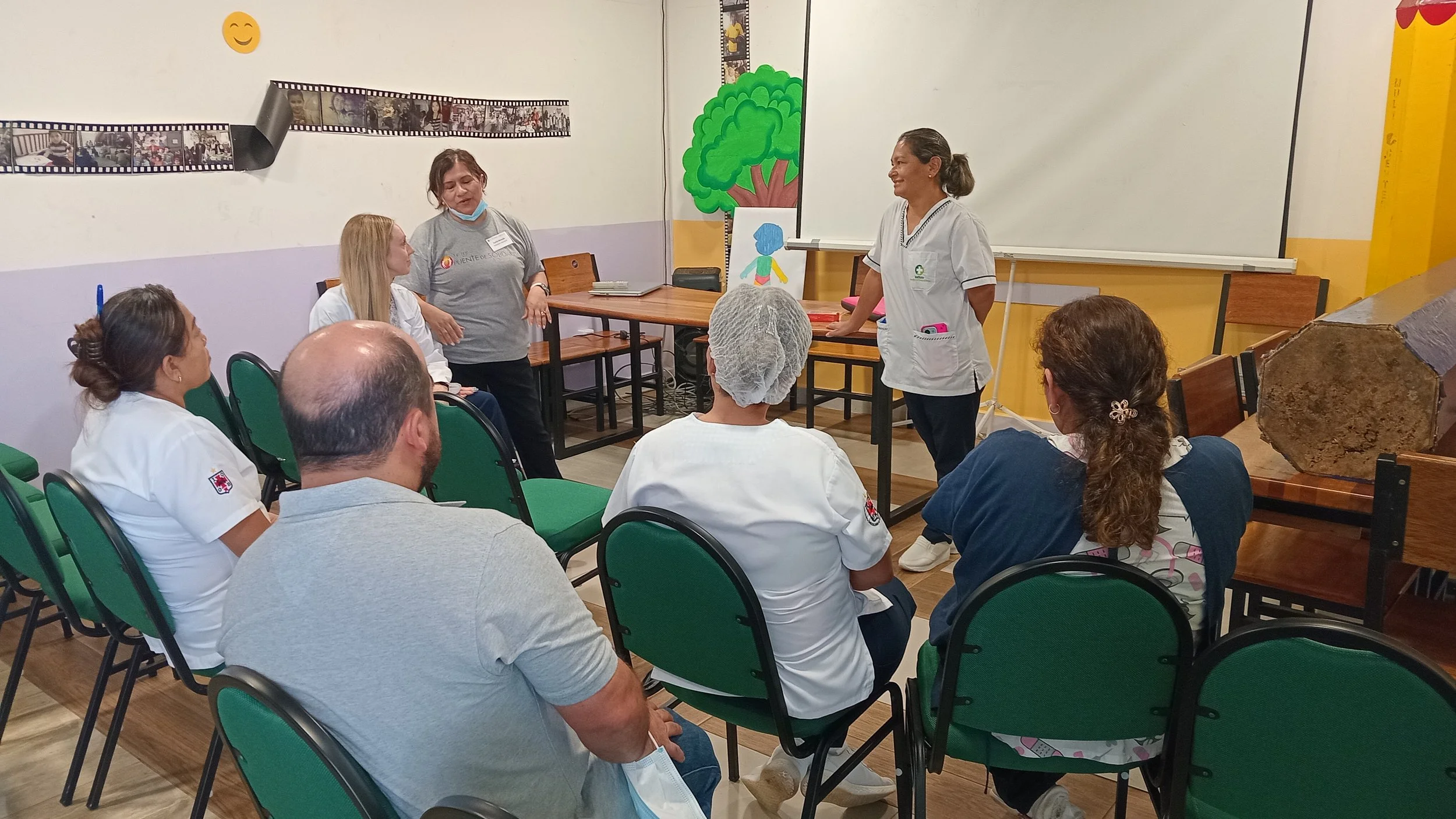
Nicole and Heidy Saavedra, head nurse at the Oncological Institute, co-lead a dialogue with the local nursing team focused on pre- and post-operative care within oncologic surgical settings.
The nursing staff also requested two in-service sessions. I’ll admit that I was nervous. But that quickly faded as the conversations unfolded. What began as teaching turned into meaningful exchange. We discussed both the differences and unexpected similarities between nursing in the U.S. and Bolivia. Their curiosity, openness, and shared commitment to patient care reminded me that, regardless of setting, the heart of nursing—and the importance of teamwork—remains universal.
The Patients
One of the most meaningful aspects of this trip was reconnecting with patients from the previous year.
Solidarity Bridge mission trips often include a home visit to a current or past patient, and this year we planned to visit Mario, a patient with whom I worked closely in March 2025 after his gastric cancer surgery. Mario’s work schedule interfered and we had to cancel the visit, but I continued to hope we would have the chance to see how far he had come.
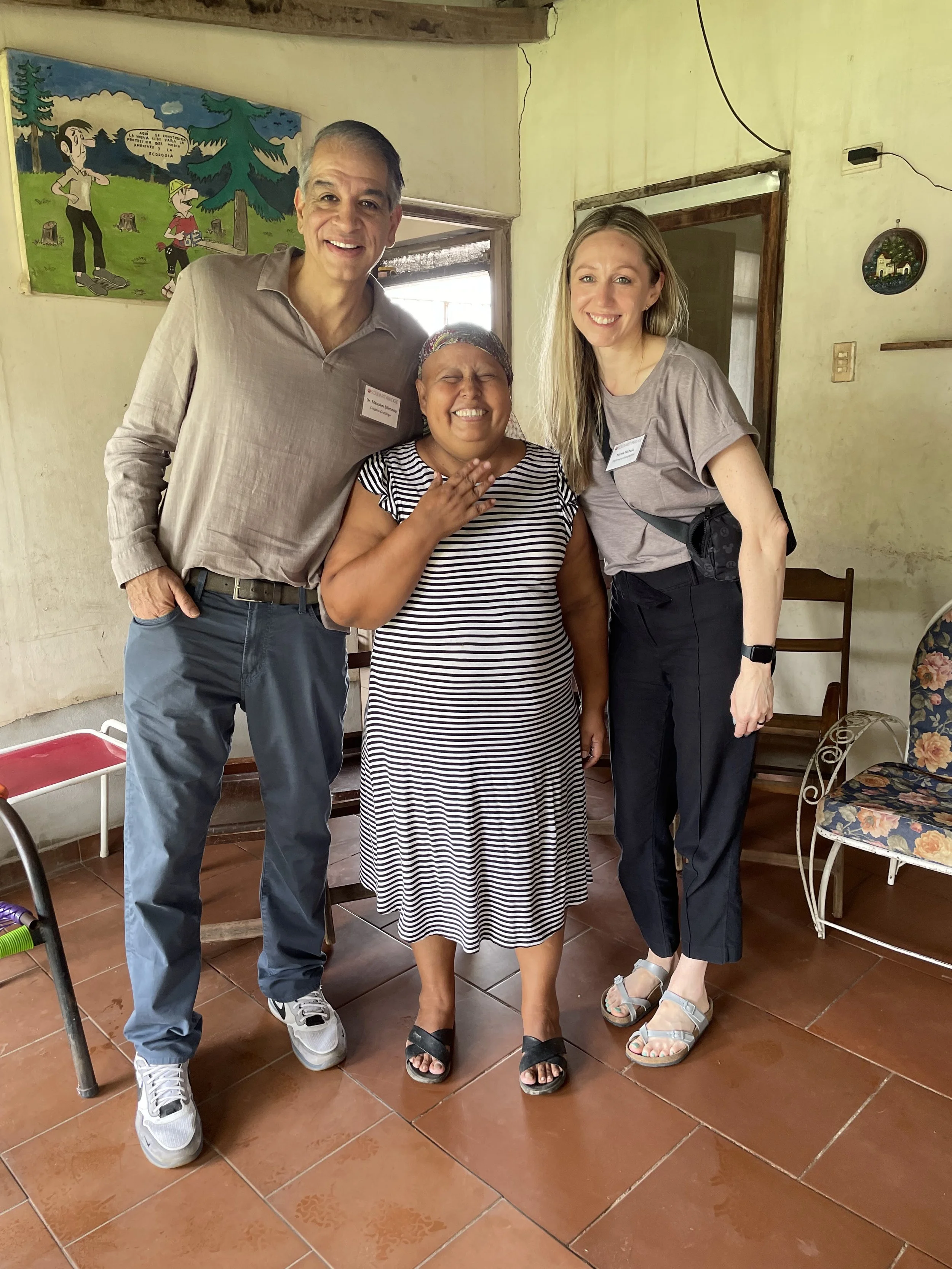
Nicole and General Surgeon Dr. Malcolm Bilmoria visit a former patient of theirs at her home during the 2026 mission trip.
Instead, we were invited into the home of Elena, another 2025 patient who had undergone removal of a large malignant soft tissue tumor. As she peeked through her gate upon our arrival, I recognized her instantly—her smile was unforgettable. Inside, her home was filled with warmth, and her family, once overwhelmed with fear, now radiated peace.
“I never thought I would see you again,” she said.
Those words stayed with me. Over the past year, I had often thought about the patients we treated. Hearing that she had thought of us too was deeply moving.
Ten complex surgeries were performed during this year’s mission, ranging from pancreatic and secondary liver cancers to soft tissue tumors and advanced head and neck malignancies. As patients began recovering, Ceci and I focused on mobility, education, and support. By the end of the week, our attention shifted to discharge preparation.
One moment that will stay with me forever was meeting a patient’s wife—a woman about my age—who quietly told us, “I don’t know how to read” when we provided her with written instructions. My heart sank. We carefully walked through every detail of her husband’s care, ensuring she felt confident despite the barriers she faced.
In another moment, a patient’s daughter wore a shirt that read “Chicago.” When I told her I was from Chicago, she smiled and said, “I know—that’s why I wore it.” It was a small gesture, but one that meant so much.
Teamwork and Connection
This team was extraordinary. Every person brought something unique and essential to the mission.
Some of my favorite moments were our evening reflections on the hotel rooftop, led by Juan Gómez, our chaplain. He had a remarkable ability to guide us in processing the day’s experiences with intention and depth. Hearing others share their stories and motivations added a powerful dimension to the work.
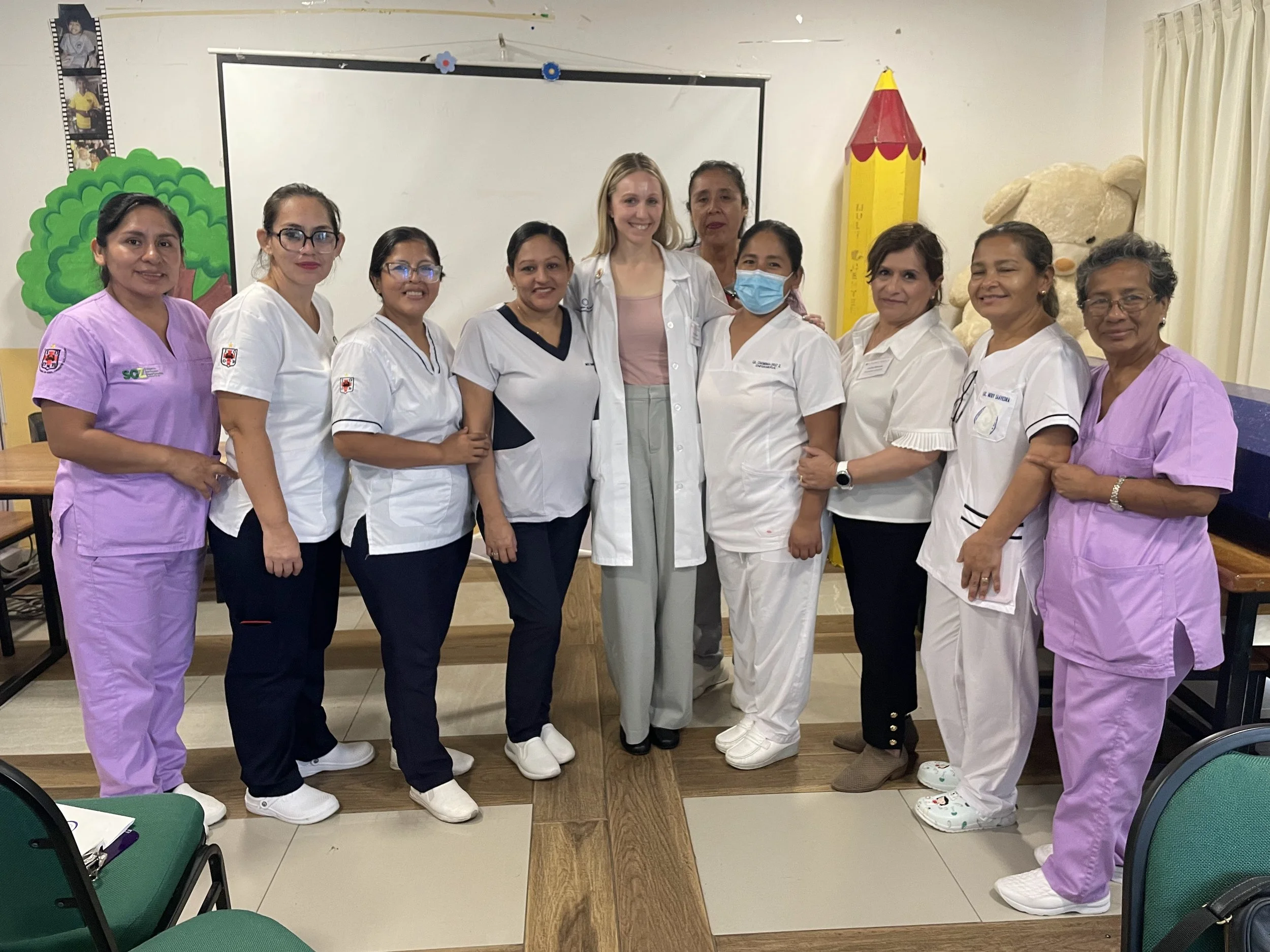
Nicole with the Oncological Institute’s nursing team
The physicians on our team brought not only expertise, but purpose. Their commitment to equitable healthcare, mentorship, and compassionate care was evident in everything they did. It was inspiring to witness the way they connected with both patients and local providers.
I was especially moved when our trip leader, Jodi Grahl, shared the personal story that led her to this work. It was a reminder that behind every mission is a deeply human reason for showing up.
Our other Bolivian volunteer interpreters—Drs. Nicholas, Nicole, and Cami—were equally inspiring. As physicians early in their careers, they brought profound empathy, cultural awareness, and dedication to both their clinical work and their role as interpreters. They are wise beyond their years and will undoubtedly become exceptional clinicians.
Personal Impact
Healthcare can be an emotional rollercoaster. We strive to give our best to every patient, every day—but it isn’t always easy.
Before my first trip, a colleague who has traveled with Solidarity Bridge told me, “This experience will remind you why you chose healthcare.” She was absolutely right.
This mission was a reset. It challenged me, grounded me, and ultimately renewed my sense of purpose. I returned home not only reinvigorated, but deeply grateful.
Gratitude
As the mission came to a close, I felt torn—eager to return home to my family, yet reluctant to leave behind the people and connections that had formed in such a short time.
At the closing ceremony, families gathered to share their gratitude. As we entered the hallway, I was greeted by a familiar face—Mario’s wife. Though he couldn’t attend, she came to update us.
She showed us photos of his recovery. The transformation was incredible. The man I once knew as frail and weakened by chemotherapy now looked healthy, strong, and full of life.
In that moment, everything came full circle.
Gratitude feels too small a word for what this experience has given me. In the quiet moments between the work, I found renewed perspective, deeper purpose, and profound appreciation for the resilience of the human spirit.
Leaving Bolivia carries a quiet sadness, as part of my heart remains with the people and places that changed me. But this is not goodbye—it is simply a pause until the day our paths cross again.
*Some patient names have been changed to respect their privacy
